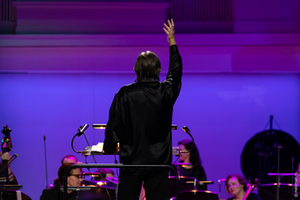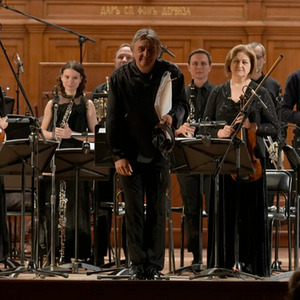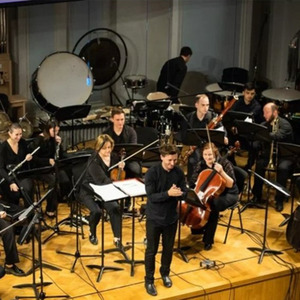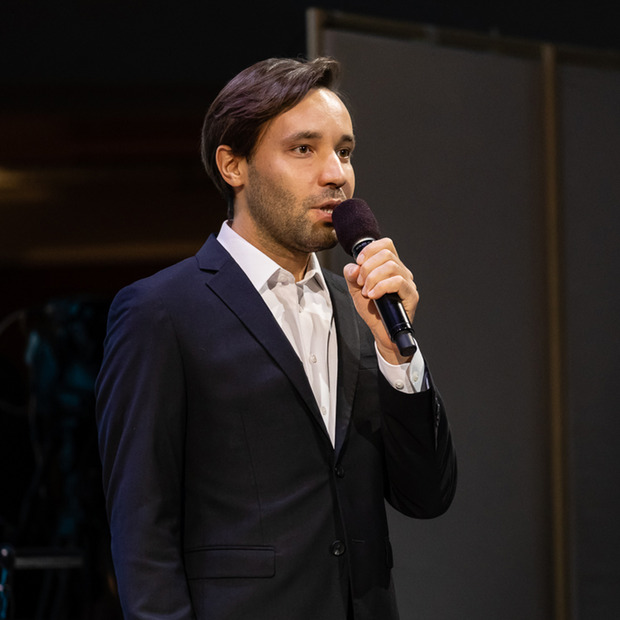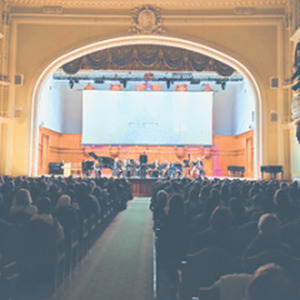

The Art of Perspective – this is the theme of the thirteenth Moscow Forum contemporary music festival, which this year is dedicated to Italian and Russian music. A perspective is a glance forward, a view of the future; the art of perspective is the ability to shape this future. The Moscow Forum will feature, first of all, the young generation of Russian and Italian composers who determine this future. Eleven world premieres and seventeen Russian premieres will be presented on the festival. The concerts will alternate with open lectures and master-classes by composers and performers.
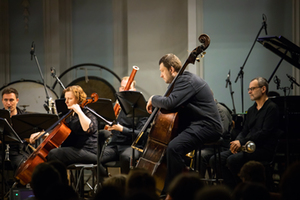
The musical marathon will take place between December 8 and December 14, and among its participants will be such famous musicians as two ensembles from Italy – the Alter Ego and the Xenia ensembles, as well as the Studio for New Music ensemble. The Art of Perspective will also present a few recently formed groups – the Eidos vocal ensemble, the Kuku Group and an ensemble from Nizhni Novgorod with the conspicuous title NoName.
Six Italian composers are coming to Moscow to present their new sound projects. However, the art of perspective is not merely sound, but also experimental audio-visual compositions by Russians and Italians, which will be presented in a separate concert, Sound&Vision (at the Theatrical Center on Strastnoy Boulevard on December 11). A special guest of the festival will be Ivan Fedele, one of the most well-known composers in present-day Italy, who has written a composition, titled Deystviya for the Studio for New Music ensemble, expressing his Italian perception of Russia.
A special concert of the Moscow Forum festival is dedicated to the music of Luigi Nono – in the evening of December 9 the Reussian premieres of two of his most important compositions will take place, whereas in the daytime there will be a discussion of the philosophical, aesthetical and political ideas of this cult composers. The main participant of the meeting will be the renowned Soviet anti-Soviet theatrical producer Yuri Lubimov who countered the resistance of the Soviet authorities by presenting in the distant year 1975 in the very heartland of the Italian tradition – at the La Scala Theater – Nono’s radical opera Al gran sole carico d’amore with texts by such political gurus as Marx, Lenin Che Guevara and Castro, which is at the same time dedicated to the theme of women – to the texts of heroines of various revolutions – from Rosa Luxembourg to Aida Santamaria. The discussion will also include the participation of Nuria Schoenberg-Nono, the composer’s wife, and the well-known Italian composer Nicola Sani, the producer of a film about Nono.
The title The Art of Perspective also refers back to the remarkable period in Italian art when artists abreast with scientists sought for new laws of composition, geared at the peculiarities of our visual and auditory perception. It is particularly in Italian art of the Renaissance that parallel straight lines converge, whereas in choral compositions independent voices blend together more often into unified chords. From that moment the abstract-symbolic physical space of medieval artistic imagery transforms into a perceptive space, subservient to our subjective sensual perception. In music that is composed from that moment the free linearity of melodic movement of separate movements conforms to vertical chord progressions that are clearly perceived by our ear. It is interesting to note that in Russia during the course of several centuries in icon painting the opposite principle predominated – the laws of the “reverse perspective” and a symbolic, rather an illusory logic of composition. The same situation was present in Russian music – harmonic part singing was established here only towards the end of the 17th century.
Curiously enough, it is this trait of the art of perspective in particular that formed the main foundation of the Russian avant-garde music and art from the early 20th century. It is possible that at the present time as well this “non-equilibrium balance” between the sensitive and the symbolically conceptual beginnings in many ways determines the particularities and differences between Italian and Russian music and, maybe, the perspectives of the art of our countries.
Vladimir TARNOPOLSKI, artistic director